
Varroa mite (Varroa destructor) is an external parasite that attacks European honeybees (Apis mellifera). It’s considered one of the greatest threats to Australia’s honey bee population and plant industries that rely on bee pollination.
Detections in Australia
In June 2022, varroa mite was detected in sentinel hives at the Port of Newcastle, New South Wales. Following a 14-month emergency response, it was determined in September 2023 that eradication of varroa mite in Australia was no longer achievable.
The response transitioned to a program which focussed on slowing the spread of varroa mite and improving the ability of beekeepers and growers to detect and manage the pest.
The two-year transition to management program ended in February 2026, however, resources that were developed under the program remain publicly available to support best practice management, including in newly affected areas.
Varroa mite has since been detected in South Australia, Victoria, the Australian Capital Territory and Queensland.
Miticide resistance
Except for the Australian Capital Territory, all states with varroa mite populations are experiencing treatment resistance to both major synthetic treatment groups- pyrethroids (such as Apistan and Bayvarol) and formamidines with the active ingredient Amitraz (such as Apitraz and Apivar).
Victoria and South Australia confirmed treatment resistance to both major synthetic treatment groups in May 2026. In Victoria, one apiary is impacted in the north-east of the state, while in South Australia, hives associated with the Pooginook Detection Zones have been impacted.
This follows confirmation of treatment resistance occurring in small number of apiaries in northern New South Wales and Queensland in early 2026.
Research conducted by the NSW Elizabeth Macarthur Agricultural Institute confirmed that the resistant mites in NSW and QLD these apiaries are associated with a more recent incursion of Varroa destructor – separate from that first detected in 2022.
Resistant mites appear to be spreading through the trade of bees and proximity to affected apiaries.
Resistance in varroa mite populations can arise quickly, particularly when they are repeatedly exposed to synthetic miticides such as Bayvarol, Apistan, Apitraz and Apivar.
When varroa mites develop resistance to one or more treatment chemicals, valuable tools for controlling their populations are lost. With fewer available and effective control options, mite levels in colonies can rise, leading to increased stress on hives and higher rates of colony decline or mortality.
The resistance to both major synthetic treatment groups has been communicated to registered beekeepers in all affected jurisdictions through their department of primary industries.
Bee Biosecurity Officers are working with impacted beekeepers to help assess their individual situations and facilitate the collection of mites for further testing. This testing will help gain a better understanding of the distribution of this resistance in the varroa mite population.
The ongoing work by the states, territories and the Australian Government is being delivered through the National Bee Biosecurity Program and the National Bee Pest Surveillance Program.
Advice for beekeepers
Beekeepers should ensure best practice is followed to slow the development and distribution of this resistance.
- Monitor mite numbers before, during and after miticide treatments. Reach out for help from your primary industries department if you suspect treatment failure.
- If you suspect that resistance-carrying mites are in your area and you treat with pyrethroid or amitraz products, check colonies when they reach mid-treatment to detect potential treatment failure early.
- Adopt integrated pest management strategies, including the use of mechanical and cultural controls along with the rotation of chemical with different modes of action.
- Ensure that you strictly follow label and permit conditions for all chemical treatments.
- Use organic and non-chemical varroa control methods where practical to reduce the use of synthetic chemical treatments.
- Practice swarm control to reduce feral honey bee sources of mite reinfestation and spread.
If you suspect treatment failure, call the Exotic Plant Pest Hotline on 1800 084 881. This will put you in touch with your department of primary industries where someone can help you to assess the situation and provide further advice.
Your obligations
Beekeepers should maintain good biosecurity practices and check their hives regularly for signs of pests and disease.
Refer to varroa.org.au for advice on varroa mite integrated pest management and beeaware.org.au for advice on bee biosecurity more broadly.
Report sightings
New detections of varroa mite should be reported along with suspected treatment resistance. This will help us understand the distribution of varroa mite and effectiveness of control measures.
To report, call the Exotic Plant Pest Hotline on 1800 084 881 or go to varroa.org.au/reporting.
Vessels and imported goods
People working around foreign vessels and imported cargo need to be vigilant for signs of exotic bees, hives and any other hitchhiker pests. Report any sightings to See. Secure. Report on 1800 798 636 or use the Department of Agriculture, Fisheries and Forestry’s online form.
Follow the rules
Keep exotic dangerous pests and diseases out of Australia. Never ignore our strict biosecurity rules.
Import shipments may need to be treated and certified. Before you import, check our Biosecurity Import Conditions system (BICON).
Movement restrictions
Check state and territory restrictions on the entry of bees, beehives, bee keeping equipment and bee products:
- New South Wales
- Queensland
- Victoria
- Tasmania
- South Australia
- Australian Capital Territory
- Western Australia
About the pest
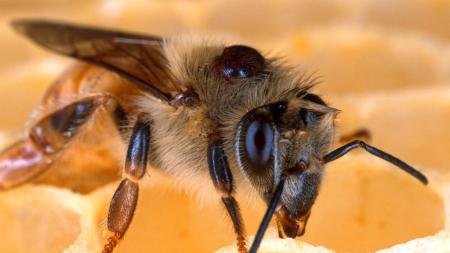
Varroa mite is an external parasitic mite that attacks European honey bees and the Asian honey bee (Apis cerana). Australian native bees are not affected by varroa mite.
It is a distinctive-looking small mite, around 1mm in diameter, reddish-brown in colour and can be seen with the naked eye.
The mite attaches itself to the bee and feeds on them. It weakens them and kills colonies. European honey bees infested with varroa are likely to die within 3 to 4 years if left untreated. The mite also transmits honey bee viruses.
Varroa mite is a Category 2 Emergency Plant Pest (EPP) under Schedule 13 of the Emergency Plant Pest Response Deed (EPPRD). Internal and external mites of bees are listed as number 9 in the Top 42 National Priority Plant Pests.
Resources
Use the links below to find more information about managing varroa mite and bee biosecurity.
- National Varroa Mite Management Program
- Varroa mite emergency response (NSW DPI)
- Wild European Honey Bee Management Program (NSW DPI)
- Impact of outbreak of varroa mite in New Zealand (VIDEO, includes discussion on risk management)
- beeaware.org.au
- Biosecurity Manual for Beekeepers (Farm biosecurity)
- National Bee Pest Surveillance Program (Plant Health Australia)
- National Bee Biosecurity Program (Plant Health Australia)