
White spot syndrome virus causes white spot disease, which is a highly contagious disease of decapod crustaceans.
These include prawns, crabs, yabbies and lobsters.
Polychaete worms used as bait that are sourced from areas affected by white spot disease can potentially carry the disease.
White spot syndrome virus (WSSV) and white spot disease (WSD) are not a threat to human health or food safety.
Detection in Northern NSW
Since April 2025, the NSW Department of Primary Industries and Regional Development (NSW DPIRD) has been responding to white spot syndrome virus (WSSV) detected in wild-caught school prawns sampled within the pre-existing Clarence River control zone and the Evans and Richmond River control zone.
These detections of WSSV occurred during ongoing surveillance in and around both control zones to monitor the spread of the virus. No WSSV has been detected outside these control zones.
The Aquatic Consultative Committee on Emergency Animal Diseases (Aquatic CCEAD) has been convened to facilitate national-level technical discussions to support the NSW response.
Testing and surveillance
Testing of surveillance samples was conducted by the NSW DPIRD Elizabeth Macarthur Agricultural Institute, and the positive results were confirmed by CSIRO’s Australian Centre for Disease Preparedness (ACDP).
CSIRO’s ACDP has also completed genetic testing on positive samples from each control zone. The analysis indicates that the strain of WSSV detected in April 2025 is consistent with the strains previously detected in northern NSW:
- in broodstock prawns at a Clarence River prawn hatchery in 2022
- in farmed prawns at Clarence River prawn farms in 2023
- in wild populations adjacent to Evans River and Richmond River in 2024.
This WSSV strain is different to the WSSV strain detected within the South East Queensland movement regulated area (SE Qld MRA).
More information on the NSW response.
NSW movement restrictions
The Clarence River control zone and the Evans and Richmond River control zone have now been merged into one control zone, with a new biosecurity control order in place since 9 December 2025.
Restrictions on the movement of prawns, other crustaceans and certain polychaete worms are in place to prevent the human assisted spread of the virus from the NSW control zone.
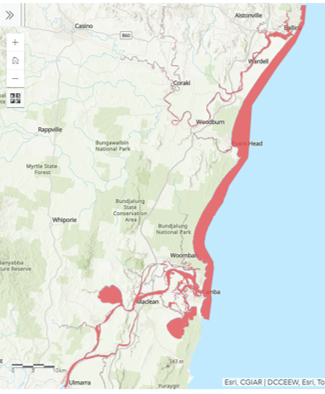
See NSW DPIRD’s map that can be enlarged to show the waterways in the control zone.
Interstate movement
Check your state or territory’s movement and import requirements before moving bait and other seafood products across jurisdictional borders.
About WSSV and WSD
White spot disease (WSD) is caused by white spot syndrome virus (WSSV). WSD is a highly contagious viral disease of crustaceans, including prawns, lobsters and crabs.
Marine polychaete worms (including beach worms) are also considered to be vectors of the disease.
Finfish are not affected by the disease and are not carriers.
White spot in aquarium fish is a parasitic skin infection and not related to white spot disease of crustaceans.
White spot disease is widespread throughout prawn farming regions in Asia and the Americas where it has caused severe losses on prawn farms.
Disease signs
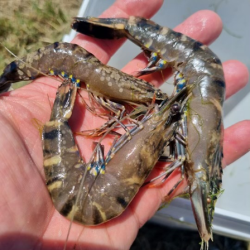
Courtesy: NSW DPIRD
Signs of WSD are:
- the rapid onset of mortalities
- lethargy or unusual swimming behaviour
- cessation of feeding
- aggregations of sick or dead prawns near the water surface at the edge of rearing ponds or tanks of farmed prawns
- white spots on the carapace.
Your obligations
You can help prevent the spread of WSSV and WSD.
Report sightings
Report anything unusual, even if you’re not sure.
If you suspect disease on your farm, call the Emergency Animal Disease Hotline on 1800 675 888. You’ll be directed to your state or territory government.
Recreational and commercial fishers
Steps to keep your favourite fishing spot disease free:
- Do not use seafood meant for human consumption as bait.
- Use local and reputable bait shops or source your own bait from local waterways.
- Put all unwanted bait and seafood in a rubbish bin, not in the ocean or waterways.
- Keep your fishing gear, boat and trailer clean. Make sure that you remove bait, debris and seaweed. Check, clean and dry wheel arches on trailers, boat propellers, fishing tackle and footwear.
- Use soapy water to clean your boat and trailer, fishing rods and other equipment. Allow them to dry completely before using them at another location, even if it is on the same day.
Import conditions for prawns
The Department of Agriculture, Fisheries and Forestry monitors and enforces stringent import conditions to manage the biosecurity risk associated with imported prawns to help safeguard our valuable fisheries and aquaculture industries.
Measures to ensure Australia's import conditions are being met include pre-border and border disease testing, retail testing, and working with exporting countries.
Resources
See more on the response and how you can manage the risk of white spot disease.
- White spot disease response in NSW (NSW DPIRD)
- White spot disease movement restrictions in Queensland (Qld DAF)
- White spot disease information guide PDF (Qld DAF)
- How to develop your aquaculture farm biosecurity plan (agriculture.gov.au)
- What you can do to Protect Australia's Aquatic Animal Health (agriculture.gov.au)
- Aquatic Biosecurity (NSW DPIRD)
- White spot disease movement restrictions video with Scott Hillier (Biosecurity Queensland)
- Biosecurity Basics (Marine pests website)